Brake Pads
Brake Pad Edge Codes: How to Read the Markings on the Backing Plate
The last two letters of a brake pad edge code describe cold and hot friction levels. What each part of the code means, and what it cannot tell you.
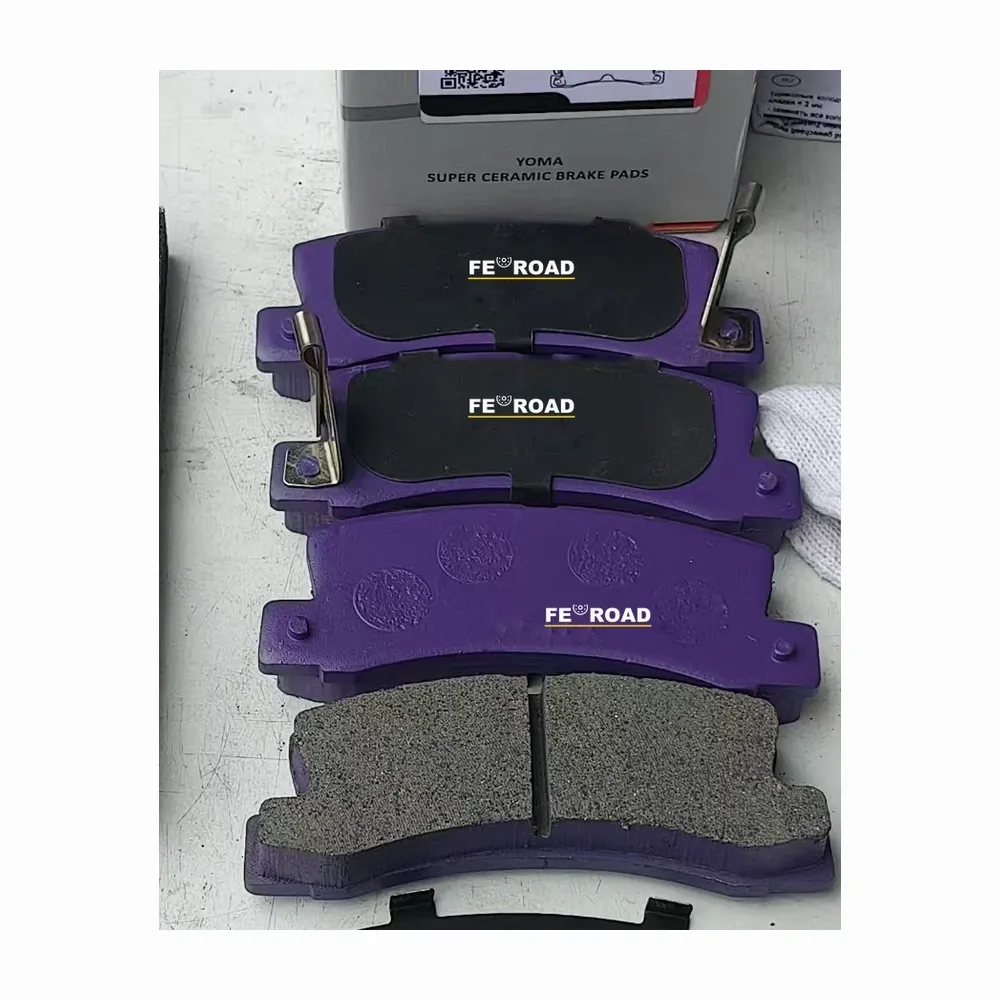
Look at the edge of the friction material on most brake pads and you will find a string of letters and numbers printed there. It has been on pads and shoes for more than sixty years, and most buyers never read it. That code is called the edge code, and its last two letters tell you something concrete about the friction material. Here is how to read it, and what it cannot tell you.
What Is Printed on the Edge
An edge code is not one fact; it is several stacked together, and each part has a different purpose. Taking them in order from the front of the string:
Manufacturer Identifier
The first two or three letters identify the manufacturer of the brake pad. This part exists for traceability: it lets an investigator work back to who produced a given pad.
Application Reference
A sequence of roughly four to eight letters or numbers follows, indicating the application the pad is intended for. It generally mirrors catalogue information rather than describing the material itself.
Friction Formulation
A further group of letters and numbers can indicate the specific friction formulation the manufacturer used. Two pads from the same maker can carry different formulation codes while sharing a shape.
The Two Friction Letters
The last part people usually mean when they say “edge code” is a pair of letters, such as FF or GG. These two letters describe the friction material’s cold and hot friction levels. This is the part worth understanding as a buyer, because it is the only part that describes how the material behaves rather than merely identifying it.
How the Two Letters Are Assigned
The letters come from a laboratory test rather than from road testing, and the standard behind it is long established. SAE established uniform procedures for reporting the friction and wear characteristics of brake linings under what are known as SAE J661 and, for the truck standard, SAE J688. The test uses a machine called a Chase machine: a heated drum driven by an electric motor, with a small sample of friction material pressed against it under controlled temperatures.
The result of that test is a friction level measured cold and again hot, and each is expressed as a letter. Coefficient of friction is conventionally written as mu, and the letter bands run from C at the lowest level upward through D, E, F, G and H, the most aggressive. So a code ending in F indicates a lower friction level than one ending in G, for both the cold and hot readings.
Reading a code such as FG therefore means: the first letter is the cold friction level, the second is the hot friction level. When you see a code ending in ZZ, it signals that the material could not be classified under the normal test, which is typically found on very aggressive performance materials.
What the Edge Code Cannot Tell You
This is where buyers most often over-read the marking. The friction letters say nothing about noise, nothing about how long the pad will last, and nothing about wear rate, which is not part of the edge coding at all. A pad with a high friction letter is not automatically a better or quieter pad; it is simply a pad whose friction level sits in a higher band. The letters are best used for one purpose: checking whether a replacement material matches what was originally fitted to the vehicle for cold and hot friction.
Why It Matters When You Buy
For an importer, the edge code is a quality-control tool rather than a sales claim. If a buyer or a workshop needs a replacement with the same friction character as the original, the two-letter suffix lets you compare against the OE material instead of guessing from the box. It is also a quick check that a batch is what it says it is: a material supplied against a specification should carry a consistent code. What the code must not be used for is promising a specific driving outcome, because it does not measure one.
Where Feoroad Fits
We manufacture brake pads in our own factory, in ceramic and semi-metallic material, and our pads carry the edge code marking on the backing plate, so the friction information is legible on the part rather than only in a catalogue. Minimum order is 50-100 pcs with full private label support. If you need a specific friction level for your market, send us your OEM part numbers and the target application, and we will confirm fitment and come back with a quotation.