Filters & Filtration
Cabin Filters: What Activated Carbon Adds and When It Matters
Cabin filters come in particle and activated-carbon versions. What the carbon layer adds, when it matters for drivers, and how importers can stock and explain both tiers.
Cabin filters rarely get the attention oil filters do, yet they decide the air every driver and passenger breathes. On most shelves they come in two versions: a particle filter and an activated-carbon version that costs a little more. Sellers who can explain the difference in one sentence sell the right filter faster, and importers who stock both tiers serve their markets better than those who guess.
Two Versions, One Job in Common
Both versions share the same basic duty: trapping the dust, pollen, and soot that a vehicle pulls in through its ventilation system. A particle-only filter does this with layers of engineered media, and it protects both lungs and the evaporator from airborne debris. For many markets and driving patterns, it does the job respectably.
The activated-carbon version adds a second layer to the same frame. That layer exists for everything a particle media cannot catch, which is to say the invisible half of traffic air.
What the Carbon Layer Actually Does
Activated carbon is carbon treated to be extremely porous, and those pores adsorb gas molecules on contact. In a cabin filter, that means exhaust fumes, fuel odours, and the general chemical soup of city traffic are trapped chemically rather than filtered mechanically. A driver following a smoky truck notices the difference the first time the following vehicle's exhaust does not enter the cabin.
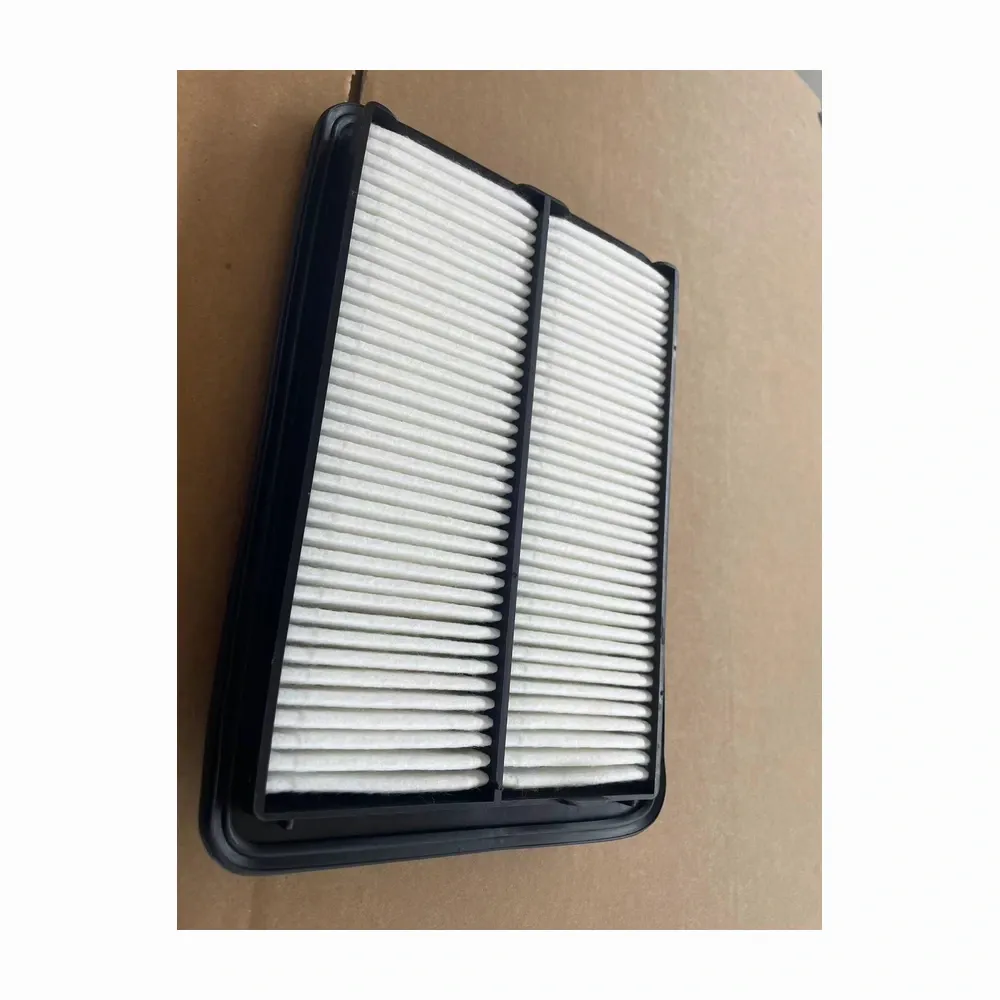
This is also why carbon filters feel different even when they look identical: the media is denser, the frame carries an extra layer, and the weight is noticeably higher in the hand. Counter staff can use exactly that comparison when explaining the upgrade.
When the Upgrade Matters Most
Carbon earns its cost in specific conditions: congested city traffic, tunnels, congested delivery routes, and hot climates where drivers keep the windows closed and the air conditioning running for most of the year. Riders with allergies or respiratory sensitivity are another strong case, because the carbon layer reduces the irritants that pass a particle filter.
Being honest cuts both ways and builds trust: on open rural roads with clean air, the particle version performs nearly the same for everyday comfort. The upgrade is about the conditions the vehicle actually lives in, not about superior quality across the board.
What Does Not Change Between Versions
Fitment does not change: both versions are built to the same vehicle applications, the same dimensions, and the same sealing points. Replacement rhythm does not change either, because dust load, not the carbon layer, is what clogs the media over time. A customer who upgrades to carbon follows the same service schedule as before, simply with cleaner air behind the upgrade.
For the importer, this is convenient: carbon versions slot into the existing range without new fitment work, new packaging logic, or new application lists.
Explaining the Upgrade at the Counter
The one-sentence version for a workshop customer: the particle filter catches dust, the carbon filter also catches the smell and the fumes. For a fleet buyer running city routes, add that drivers arrive less tired when the cabin stays free of exhaust odour, which is a small welfare upgrade at a filter-sized cost.
Clear labelling does half of this selling on its own. Tiers marked plainly, on the box and in the catalogue, prevent the classic mix-up where a counter sells the particle version as the carbon one.
A Stocking Note for Importers
Stock both tiers across the fast-moving references, weight the carbon share toward urban markets, and keep the packaging honest about which is which. Our cabin filter line supports both versions, and because fitment is identical between them, adding the carbon tier to an existing filter range is a catalogue exercise rather than a new product line. Markets differ in what they ask for first; the range should be ready for either answer.